Asian Ceramics Through the Ages: From Imperial Courts to Contemporary Collectors
Asian ceramics have long captivated the world with their beauty, craftsmanship, and historical significance. From delicate porcelain vases of ancient China to intricately glazed pottery from Japan and Korea, these artifacts are not just decorative—they are a reflection of culture, innovation, and the artistry of generations. Exploring Asian ceramics is like opening a window into the past, offering insights into trade, social hierarchies, and the evolving tastes of emperors and commoners alike.
The Origins: Early Asian Ceramics
The story of Asian ceramics begins thousands of years ago. In China, the Neolithic period (c. 5000–2000 BCE) saw the first painted pottery, often decorated with geometric designs or stylized representations of animals and humans. These early pieces were utilitarian but also carried cultural significance, often used in rituals and daily life.
In Japan and Korea, early pottery was similarly functional yet artistic. Jomon pottery in Japan, with its cord-marked designs, demonstrates sophisticated techniques and aesthetic sensibilities long before industrial ceramic methods emerged.
The Age of Imperial Craftsmanship
The rise of imperial courts transformed Asian ceramics from utilitarian objects into luxurious art forms.
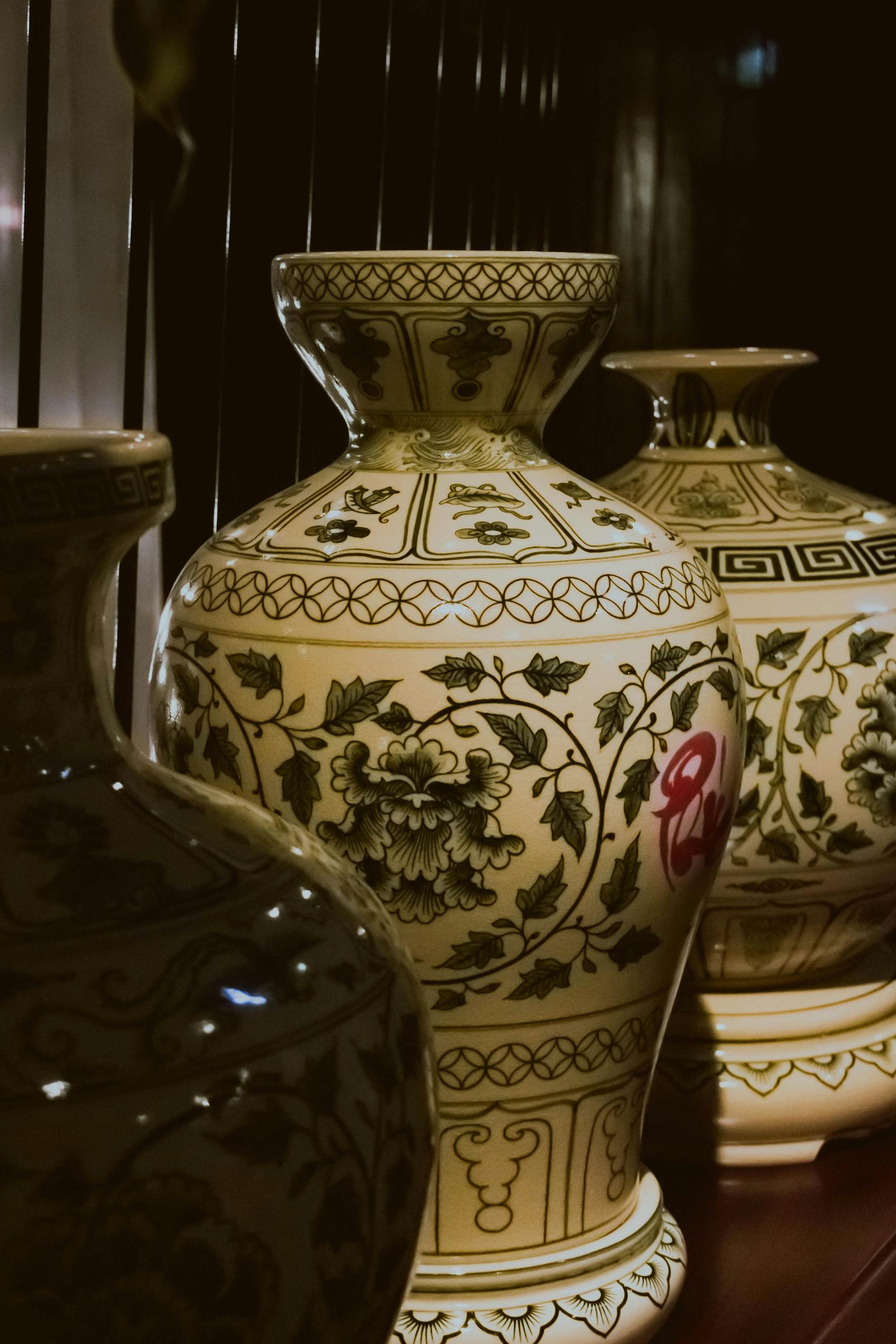
- China: During the Tang (618–907 CE) and Song (960–1279 CE) dynasties, ceramics reached new heights. Song dynasty celadon, known for its jade-like glaze, exemplified subtle elegance, while Ming dynasty porcelain (1368–1644 CE) became world-famous for its intricate blue-and-white designs. These wares were highly prized by emperors, court officials, and foreign traders alike.
- Japan: The Edo period (1603–1868) saw the perfection of Kutani and Imari ware, characterized by vibrant colors, intricate patterns, and fine craftsmanship. Japanese tea ceremonies elevated ceramics as cultural symbols, blending art with daily rituals.
- Korea: Korean ceramics, especially from the Goryeo (918–1392) and Joseon (1392–1897) periods, were renowned for their delicate celadon and white porcelain, often adorned with understated motifs reflecting Confucian aesthetics.
Imperial patronage not only drove technical innovation but also set stylistic trends that influenced collectors across Asia and beyond.
Trade and Global Influence
Asian ceramics have long been central to global trade. Chinese porcelain, often called “china” in the West, was exported along the Silk Road and via maritime trade routes to Europe, the Middle East, and Africa. These exports influenced Western pottery, inspiring Delftware in the Netherlands and Meissen porcelain in Germany. Japanese and Korean ceramics also found their way to global markets, prized for their unique aesthetics and technical mastery.
Modern Collectors and Contemporary Appreciation
Today, Asian ceramics are highly sought after by collectors and museums worldwide. Pieces from the Ming and Qing dynasties can fetch astronomical prices at auctions, while modern collectors also appreciate contemporary Asian ceramic artists who blend tradition with innovation.
The market for authentic ceramics is growing, but collectors must navigate challenges like forgeries, provenance verification, and the preservation of fragile materials. Knowledge of historical context, style, and material composition is essential to making informed acquisitions.
Tips for Collectors
- Understand the Era and Region: Each dynasty, period, or region has distinct characteristics—glaze, shape, motifs, and color palette.
- Check Provenance: Documentation, prior ownership, and auction records enhance authenticity and value.
- Inspect Craftsmanship: Genuine pieces often show subtle imperfections and signs of handcrafting.
- Consult Experts: Historians, appraisers, and experienced collectors can provide invaluable guidance.
Conclusion
Asian ceramics are more than beautiful objects—they are storytellers, connecting the past with the present. From the imperial courts that inspired perfection to contemporary collectors who cherish these works as both art and investment, these ceramics continue to fascinate and educate. Understanding their history, craftsmanship, and cultural significance not only deepens appreciation but also ensures that collectors make informed, responsible decisions in preserving these treasures for future generations.