How to Spot Valuable Vintage Furniture
Vintage and antique furniture isn’t just beautiful—it can also be a smart investment. Many people walk past valuable pieces at thrift shops, estate sales, or even in their own family homes without realizing their true worth.
Whether you’re collecting to resell, decorate your space, or build expertise, learning how to identify valuable vintage furniture is a powerful (and profitable) skill.
In this guide, you’ll learn what makes vintage furniture valuable, key features to look for, how to assess condition, and how to avoid common mistakes.
1. Understand the Difference Between Antique, Vintage, and Reproduction
Before identifying value, it’s important to know what you’re looking at:
Antique
✔ Over 100 years old
✔ Handcrafted
✔ High-quality materials
✔ Often unique or rare
Vintage
✔ Usually 20–100 years old
✔ From recognizable design eras
✔ Often mass-produced but still collectible
Reproduction
✔ Modern copy of an older style
✔ Not as valuable
✔ Usually lower-quality materials and machine-made joints
Tip: Age alone doesn’t determine value, but it strongly influences demand.
2. Look for Quality Craftsmanship
High-quality craftsmanship is one of the strongest indicators of value.
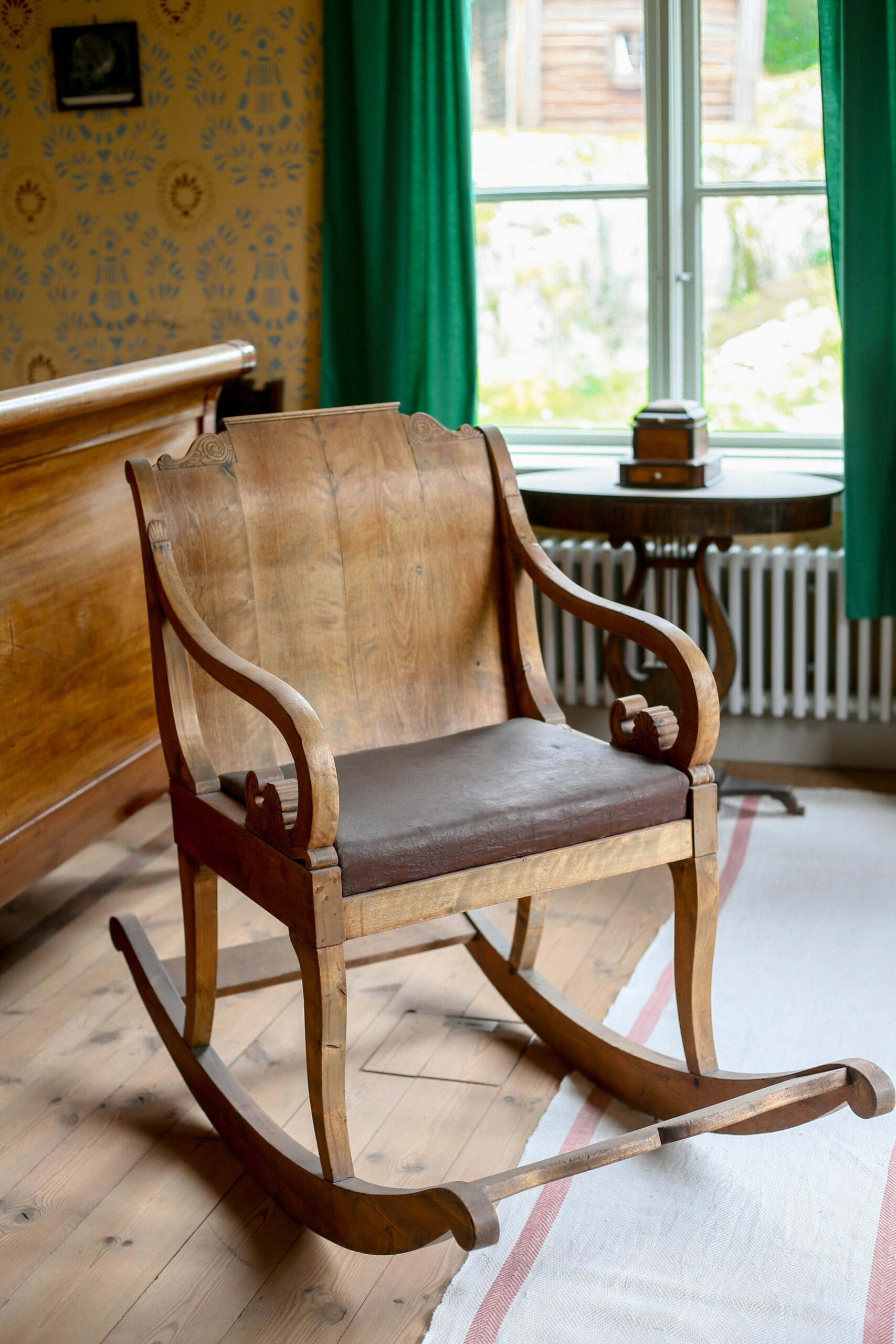
Hand-Carved Details
Hand-carved wood has slight imperfections that show the maker’s touch.
Machine-made carvings look too perfect.
Dovetail Joints
Pull out drawers and inspect the joints.
- Hand-cut dovetails (irregular, uneven) → older, more valuable
- Machine-made dovetails (perfectly even) → post-1860s or modern
Solid Wood
Tap the surface or check the underside.
- Solid wood = heavy, durable, high value
- Veneer = thin wood layer over cheaper wood (sometimes still valuable depending on era)
3. Identify the Wood Type
Different woods indicate different value levels.
High-value woods:
- Mahogany
- Walnut
- Cherry
- Oak
- Rosewood (very valuable)
Lower-value woods:
- Pine
- Plywood
- Particleboard
How to tell:
- Dark, rich grains often indicate premium wood
- Knots and light color suggest pine
- Look under the furniture or behind drawers for raw wood clues
4. Check for Maker’s Marks, Labels, and Signatures
Just like art, branded furniture often carries higher value.
Look for:
- Stamps
- Company logos
- Handwritten signatures
- Metal plaques
- Brand labels inside drawers
Valuable makers include:
- Stickley
- Heywood-Wakefield
- Knoll
- Herman Miller
- Ethan Allen (older pieces)
- Drexel
- Thomasville
A maker’s mark can instantly increase value—sometimes dramatically.
5. Study the Construction Techniques
Construction reveals age and craftsmanship.
Signs of valuable construction:
✔ Hand-planed surfaces
✔ Mortise-and-tenon joints
✔ Square nails or wooden pegs
✔ Hand-forged hardware (hinges, handles)
Signs of modern or lower-quality construction:
✘ Staples
✘ Phillips screws (post-1930s)
✘ Particleboard backing
✘ Plastic feet or handles
6. Look for Classic Design Eras
Some eras are especially sought after.
Mid-Century Modern (1950s–1970s)
Clean lines, tapered legs, teak wood
Designers like Eames, Wegner, and Saarinen are extremely valuable.
Art Deco (1920s–1940s)
Geometric patterns, chrome, exotic woods
Bold style = high collector demand
Victorian (1800s)
Heavily carved, ornate, dark woods
Still valuable depending on size and condition
Industrial (1900–1950)
Metal cabinets, factory stools, drafting tables
Very popular in modern home décor
7. Assess the Condition (But Don’t Judge Too Quickly!)
Many people overlook damaged pieces, thinking they are worthless.
But collectors often value originality over perfection.
Good wear (adds character):
- Light scratches
- Patina
- Minor fading
Bad wear (reduces value):
- Wood rot
- Structural instability
- Deep water damage
- Missing essential components
Important: Original hardware is often more valuable than refinished or replaced parts.
8. Beware of Common Reproductions
Many popular styles—like Queen Anne, Chippendale, or French Provincial—were heavily reproduced in the 20th century.
Signs of reproduction include:
- Perfectly uniform carvings
- Modern screws
- Lightweight wood
- Glossy polyurethane finishes
If it looks old but feels too perfect, be cautious.
9. Check the Underside and Back Panels
The parts you can’t see tell the real story.
Inspect:
- Underside of tables
- Back of dressers
- Bottom of chairs
Look for:
✔ Hand-cut marks
✔ Age-related wear
✔ Oxidation on metal parts
✔ Raw wood coloring
Mass-produced modern furniture often hides particleboard or MDF on the back panel.
10. Compare Market Prices Before Buying
Once you suspect you’ve found something valuable, check current selling values.
Use:
- Catawiki
- eBay sold listings
- LiveAuctioneers
- Antique dealer websites
- Facebook vintage groups
This helps you avoid overpaying—or helps you recognize a rare bargain.
11. Trust Your Instincts
The more you examine vintage furniture, the sharper your eye becomes. Over time you’ll naturally learn:
- How wood ages
- What craftsmanship looks like
- Which eras appeal to buyers
- How to recognize “the real thing”
Every collector starts as a beginner—it’s curiosity that grows expertise.
Final Thoughts
Valuable vintage furniture is often hiding in thrift stores, flea markets, online listings, garage sales, and even family homes.
By learning to spot signs of quality, age, craftsmanship, and authenticity, you can uncover incredible pieces—sometimes for surprisingly low prices.
Vintage furniture isn’t just décor—it’s a connection to history and a smart investment.